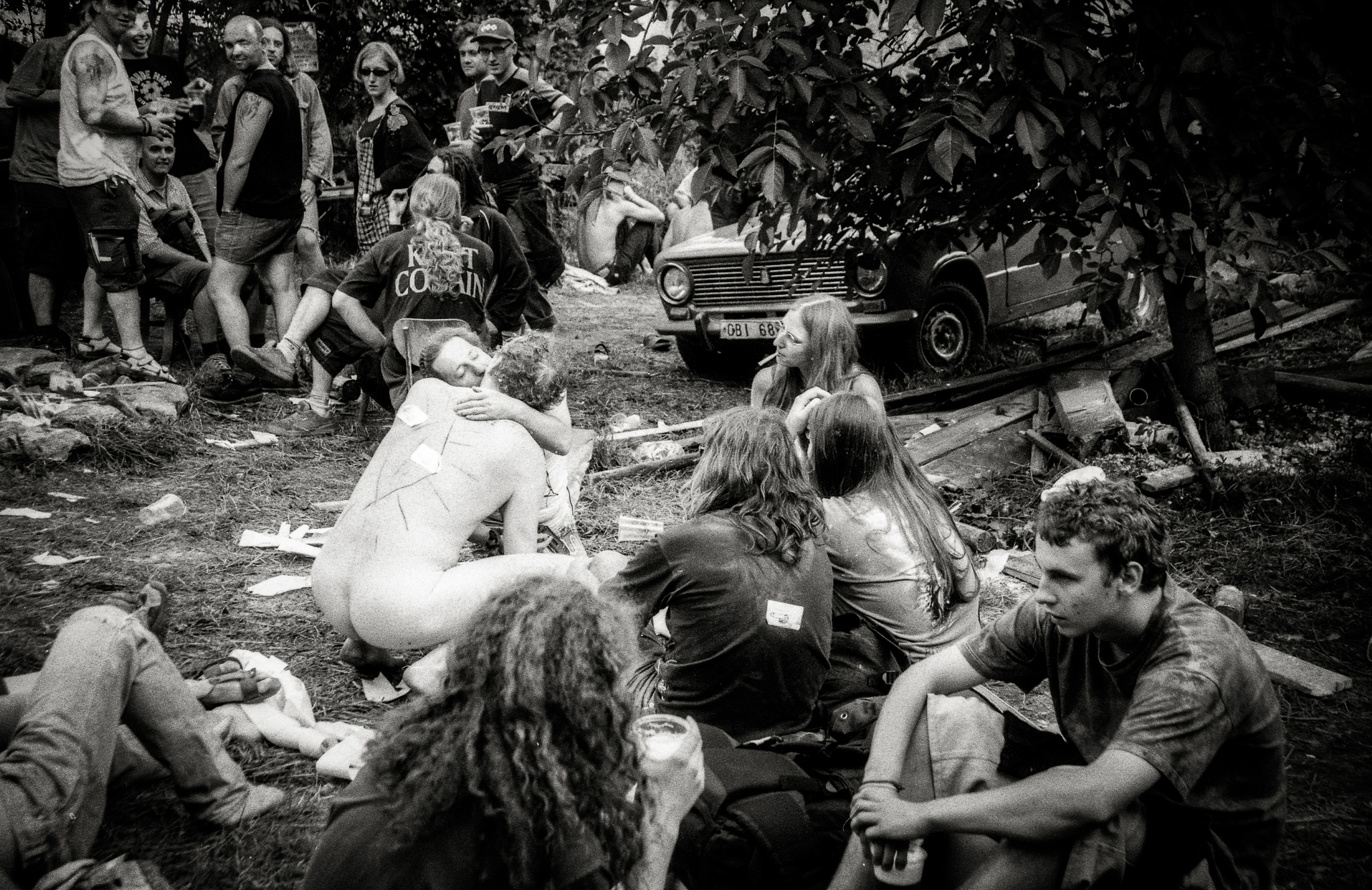
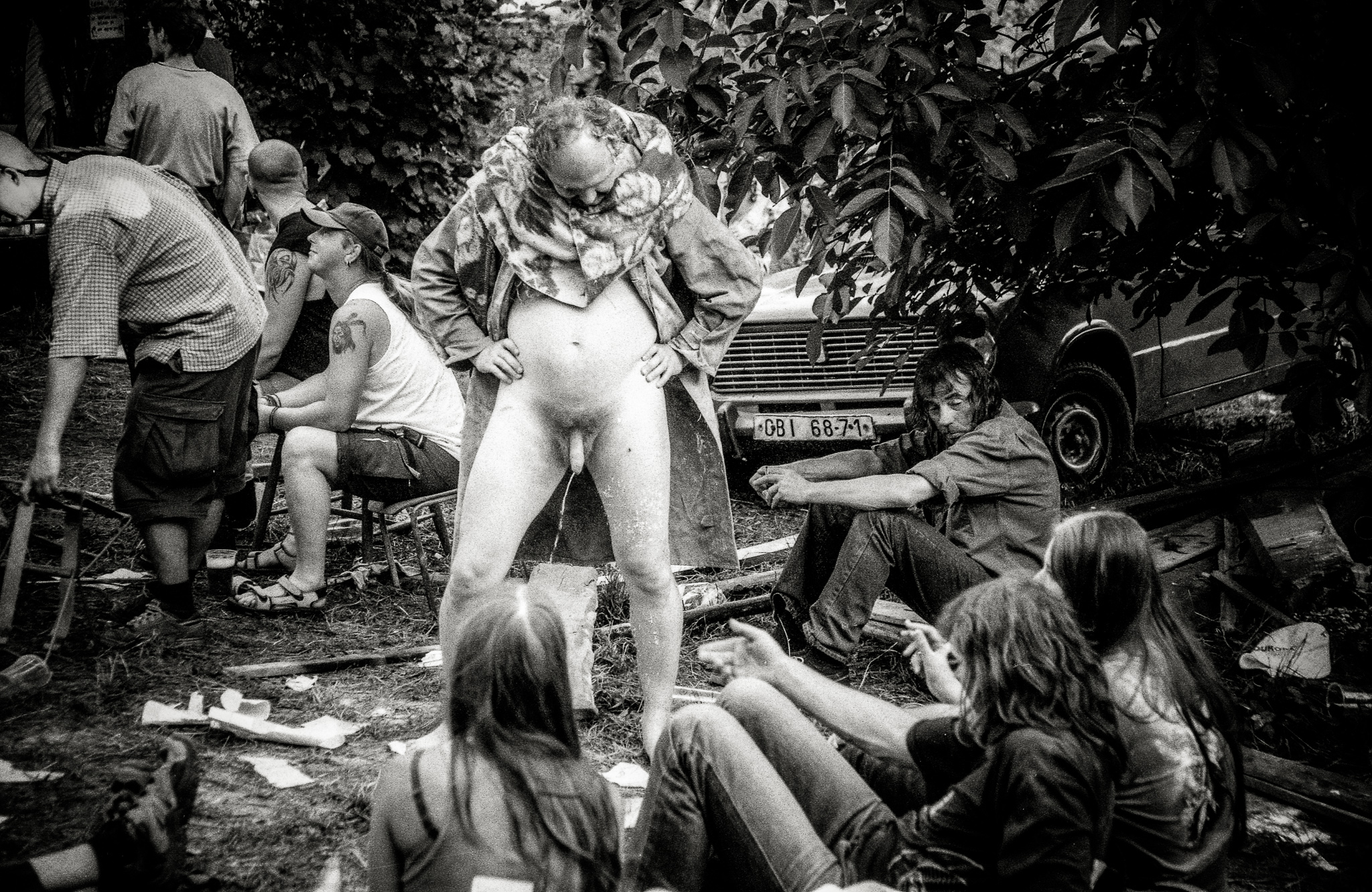
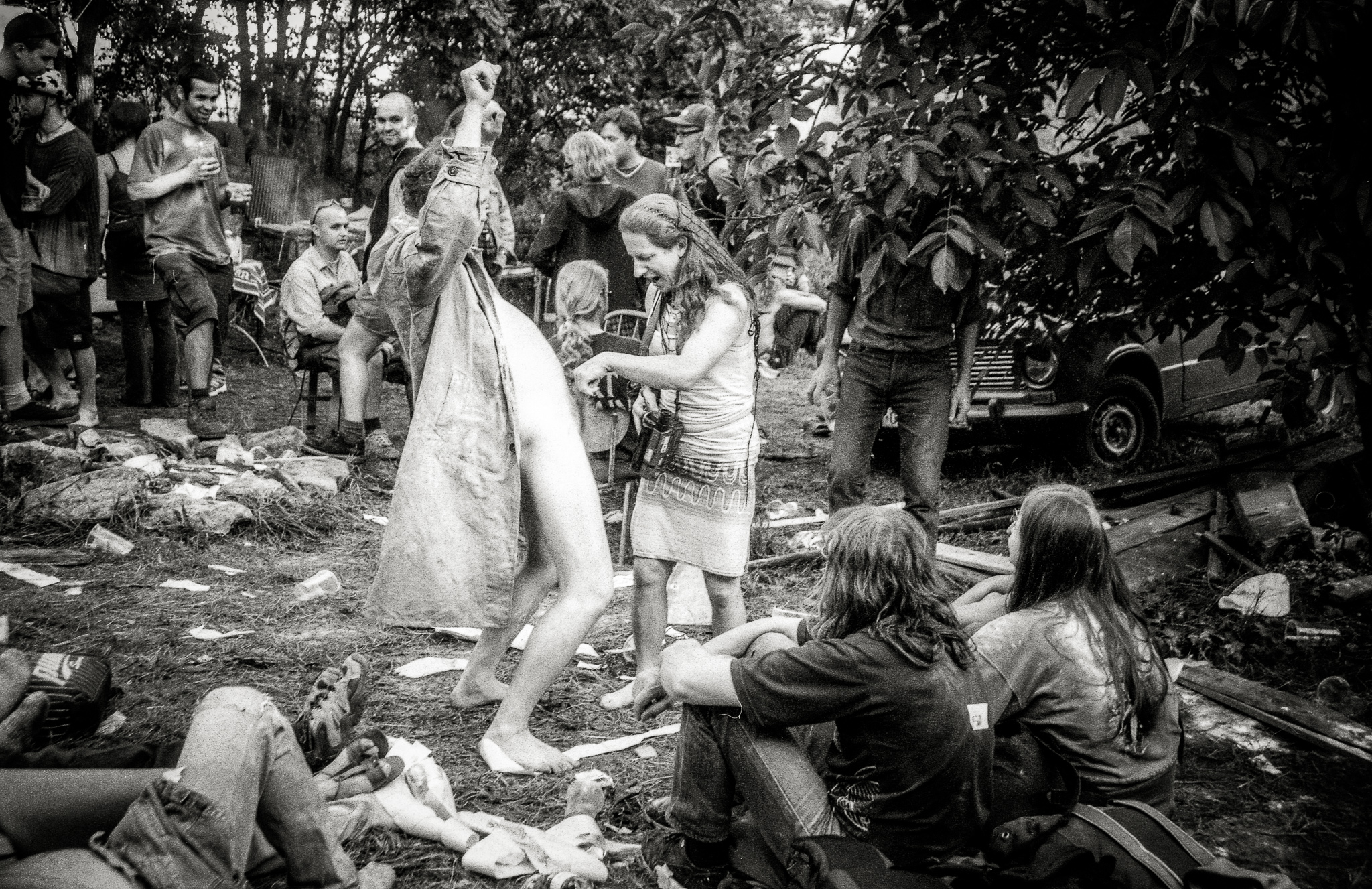
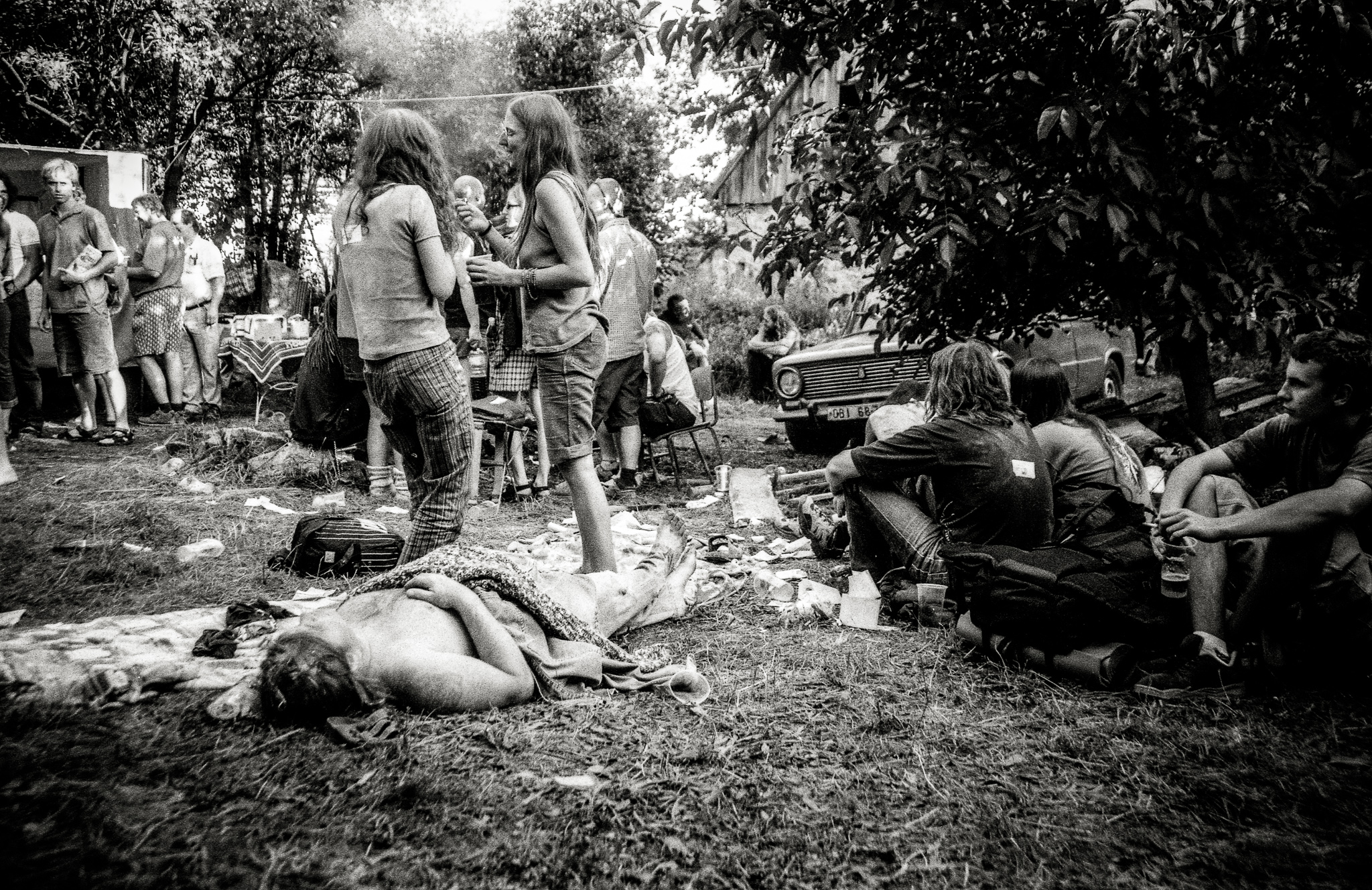
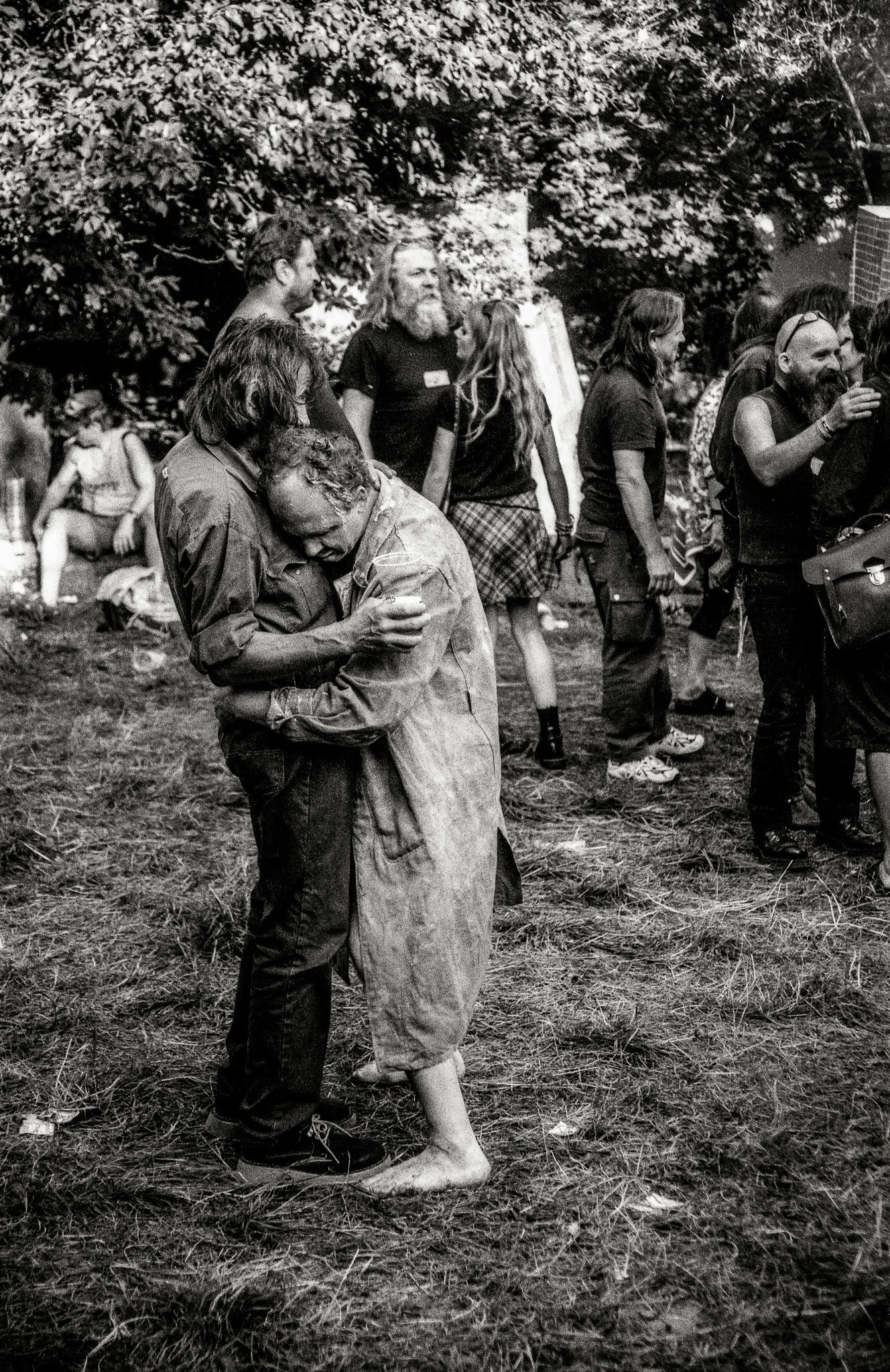
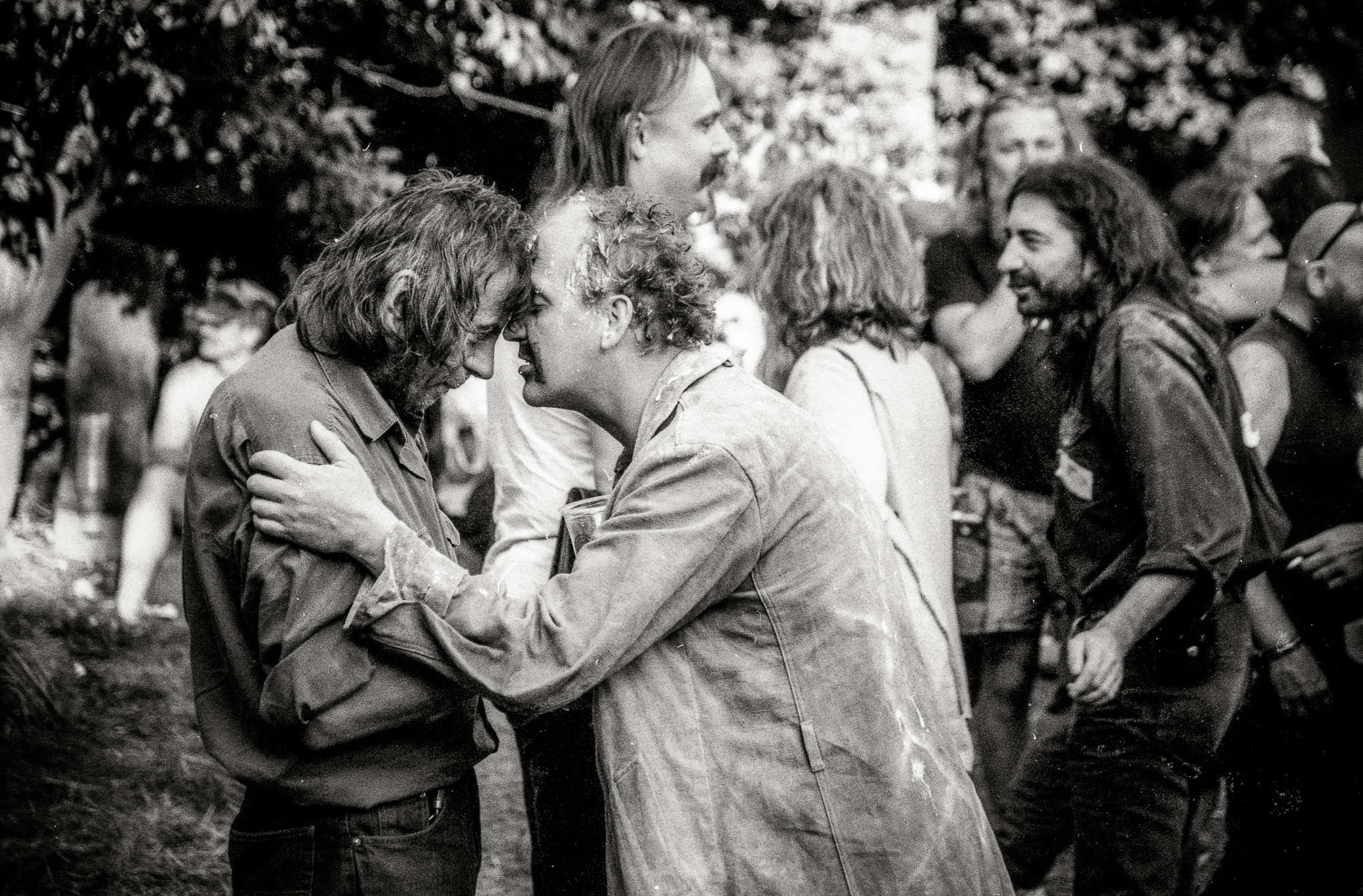
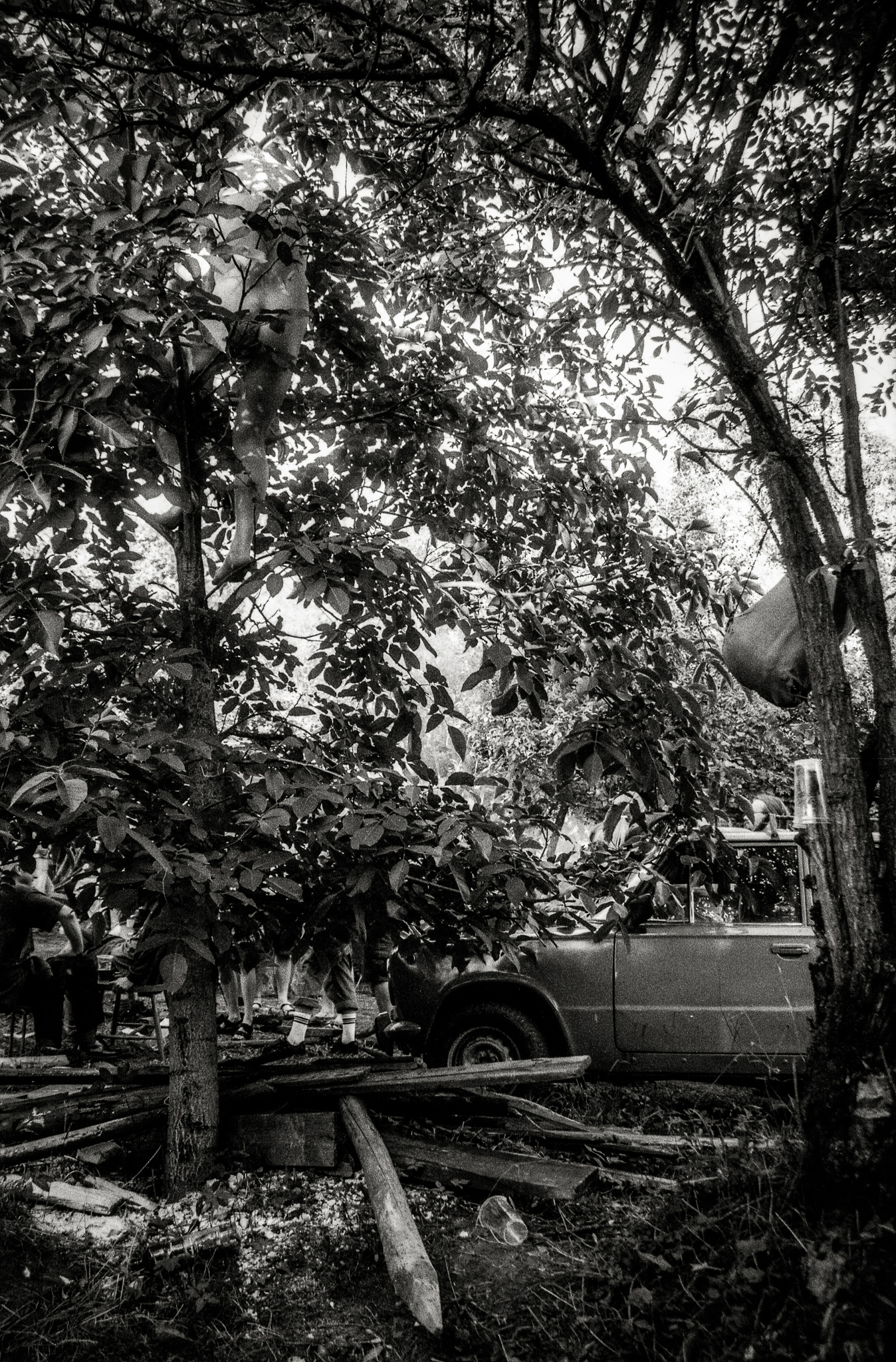
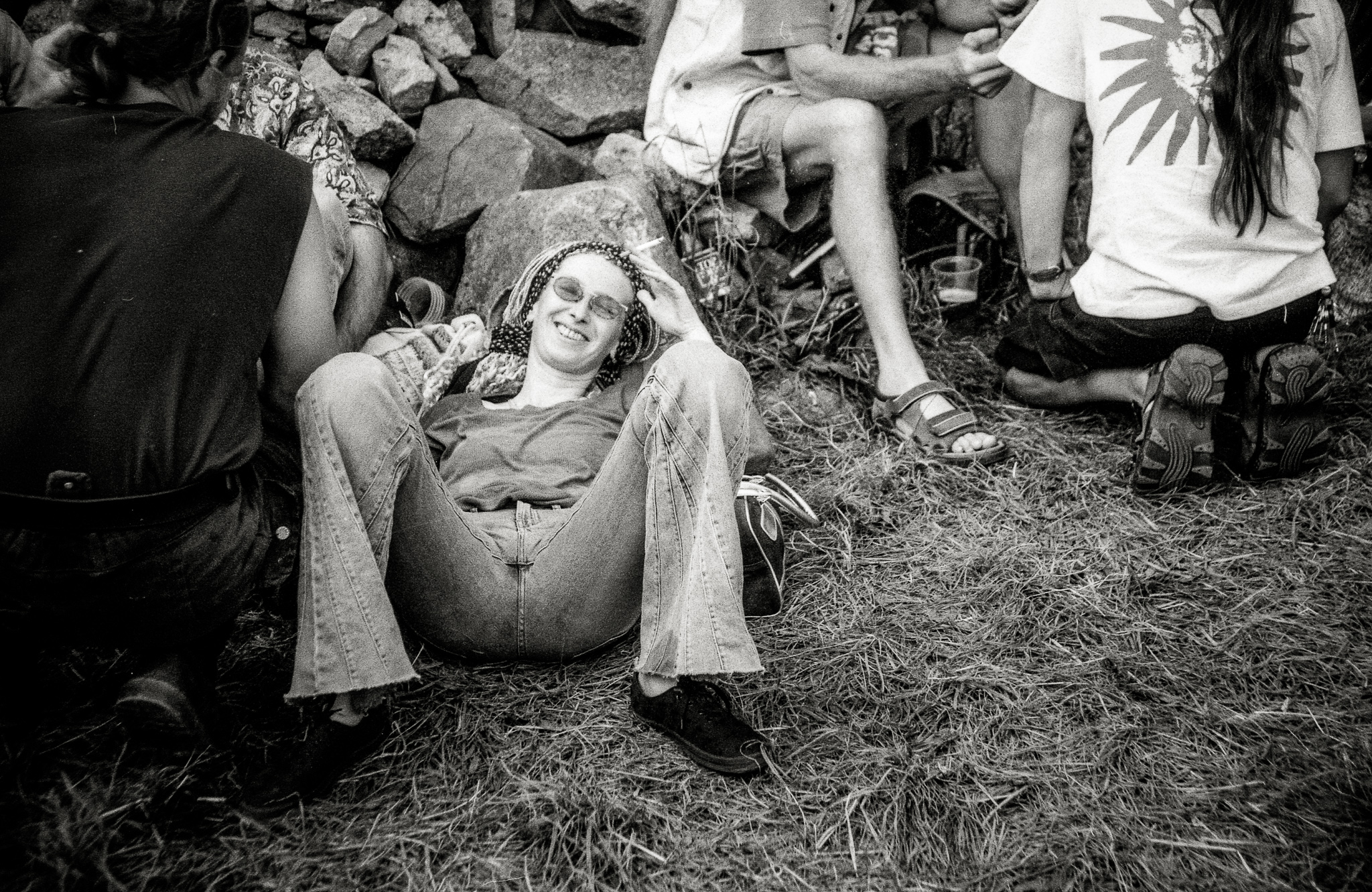
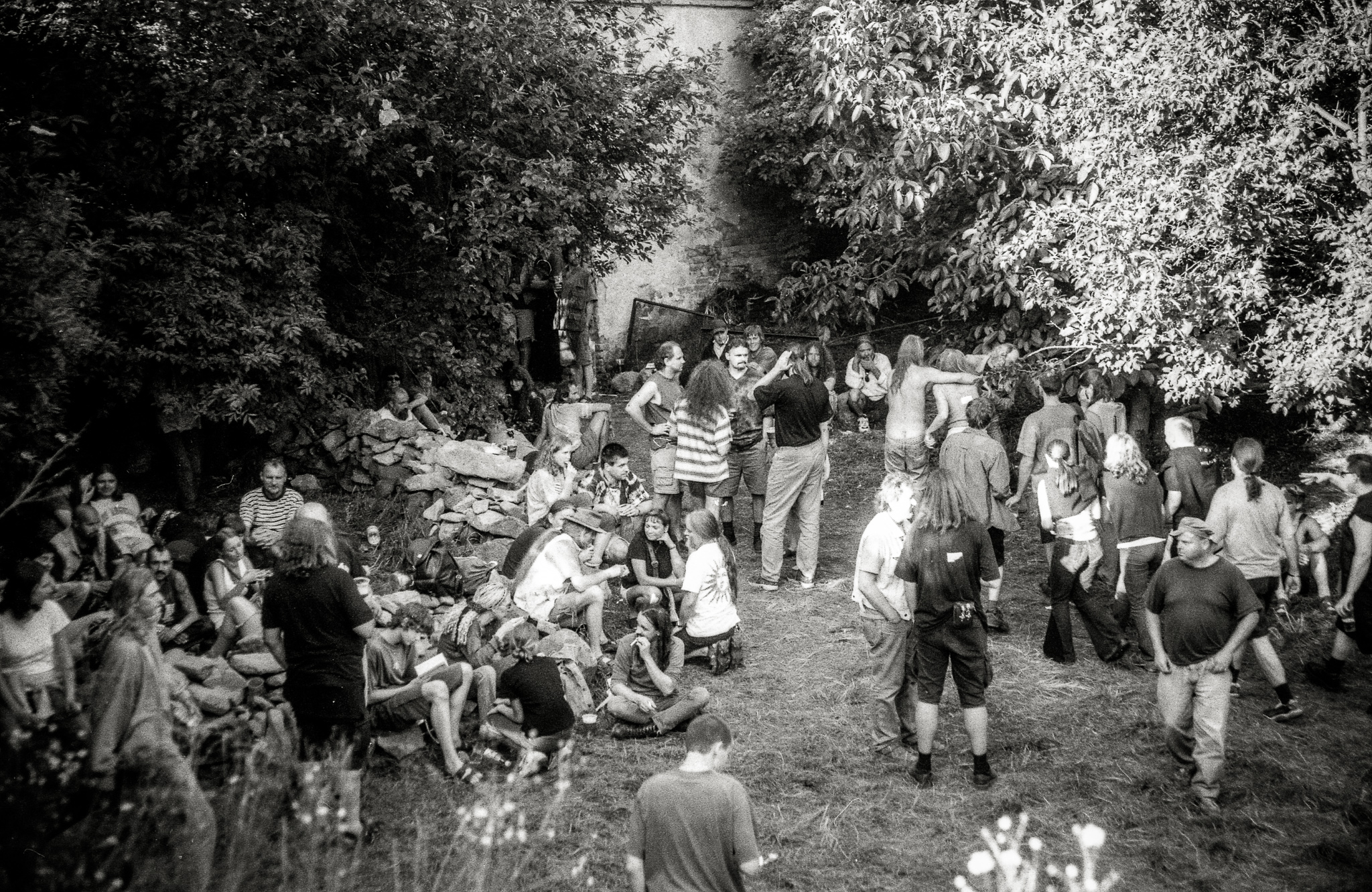
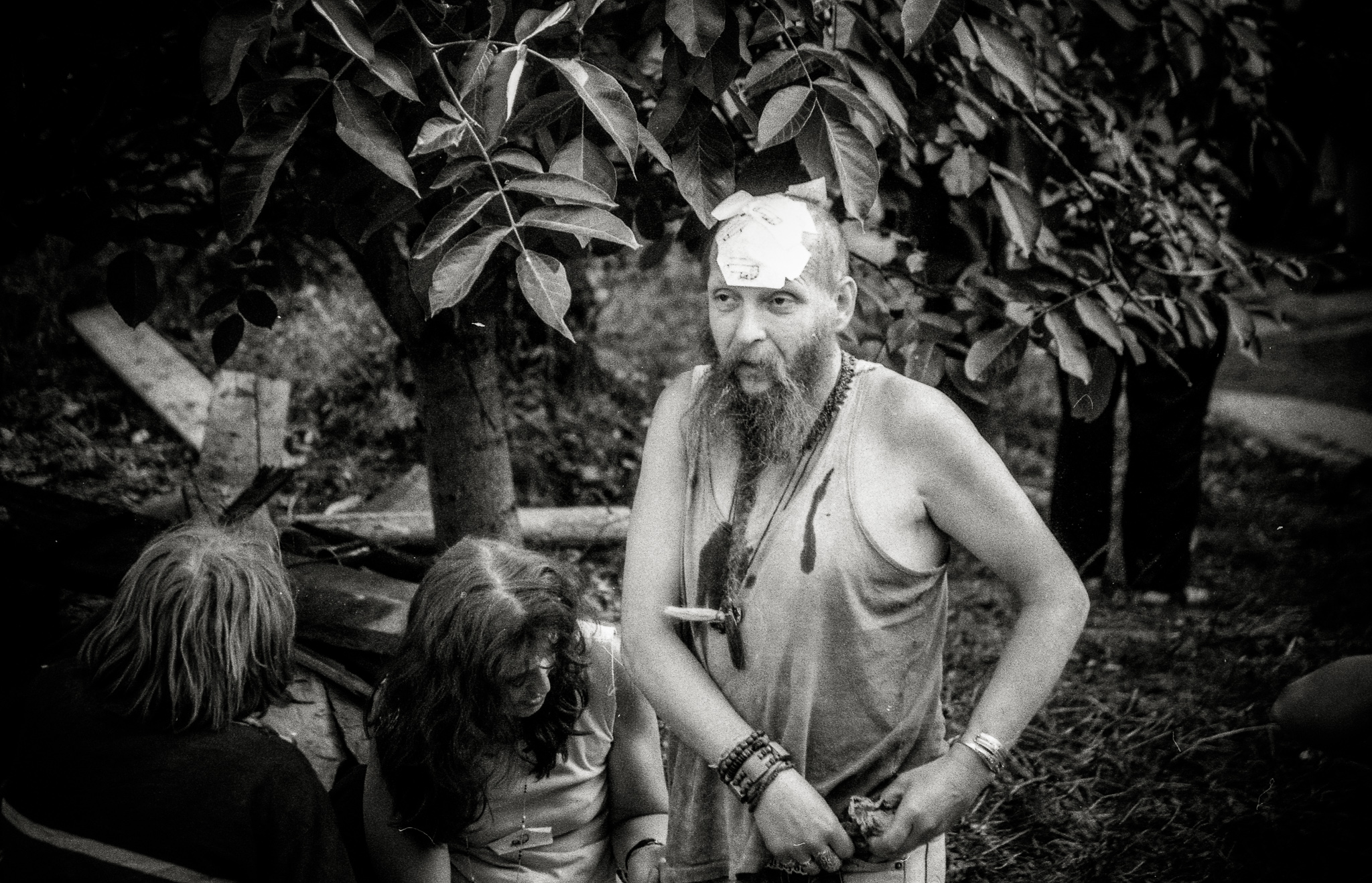
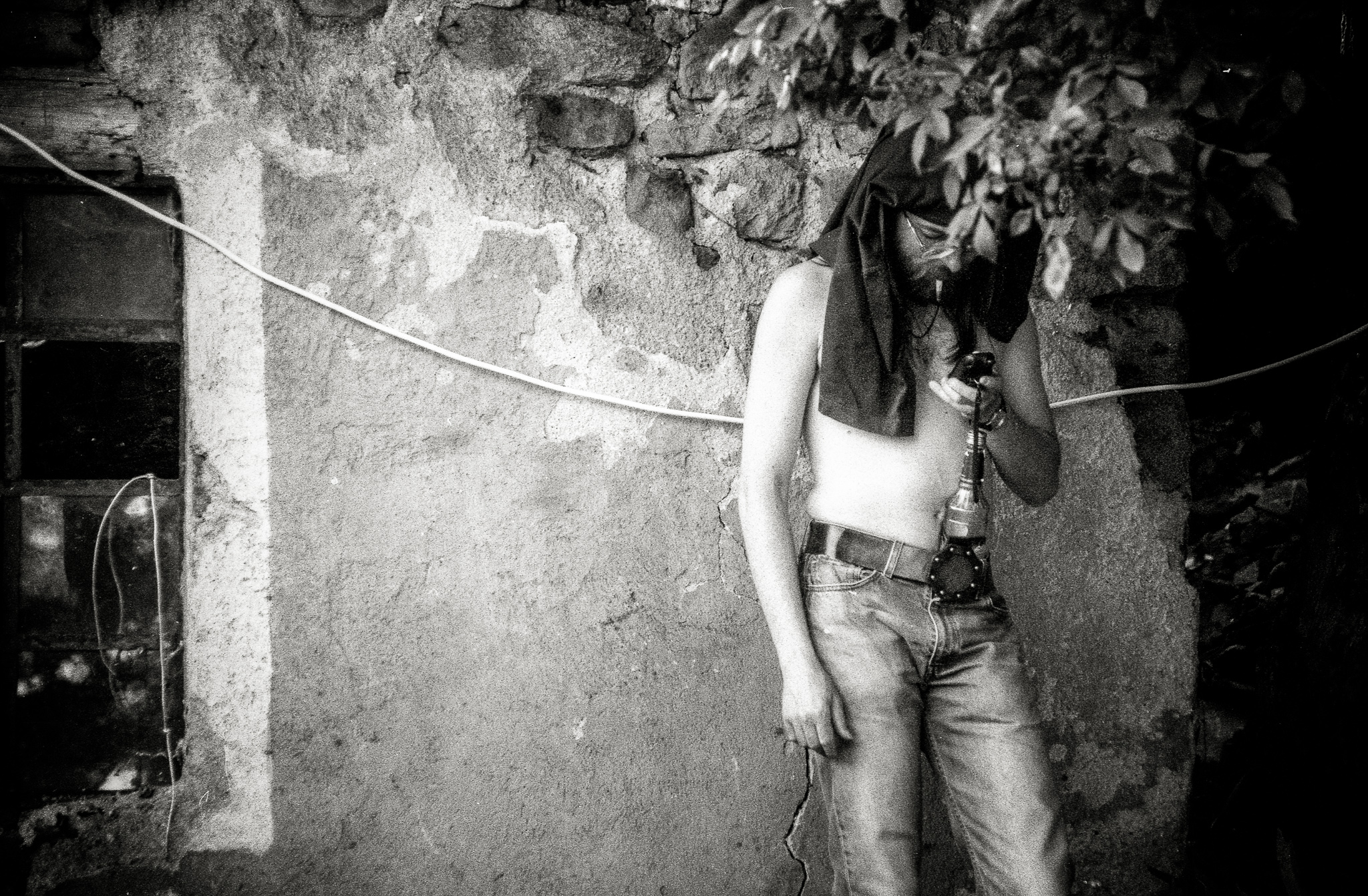
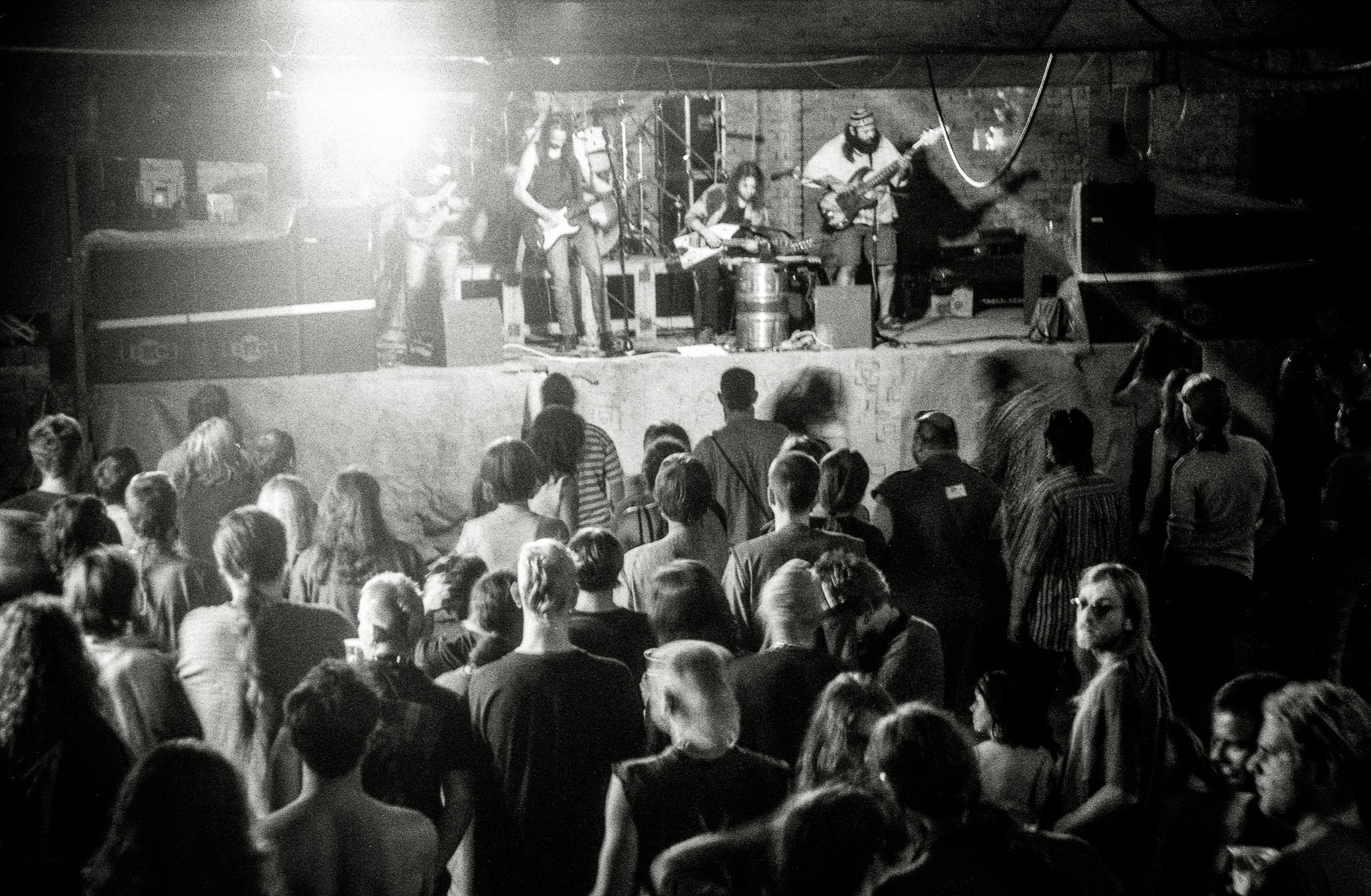
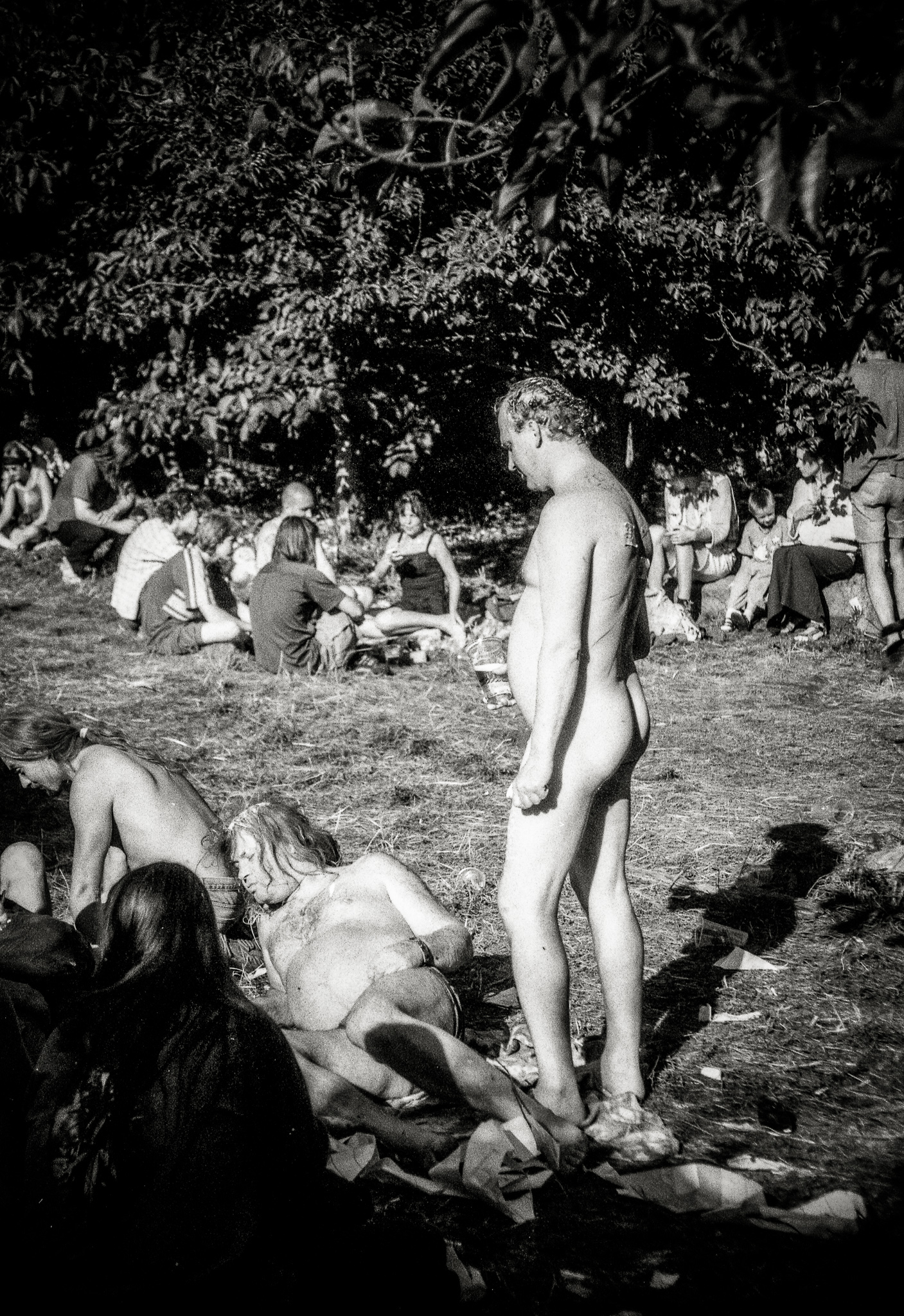
I ended up at Magor's festival rather by accident; I hadn't even planned on taking photos there. And that's how it looks. I spent most of the weekend leaning against a wall, drinking beer that my friends regularly refilled, and occasionally picking up my camera and snapping a picture of whatever caught my eye. Several times a day, I walked through the barn to the farmyard to relieve myself, which was my only ambition.
It didn't occur to me at the time that this idling would be something we would one day remember and that, especially after Magor's death, it would take on a cult dimension. Back then, we still thought it was the nineties and that it would always be that way.
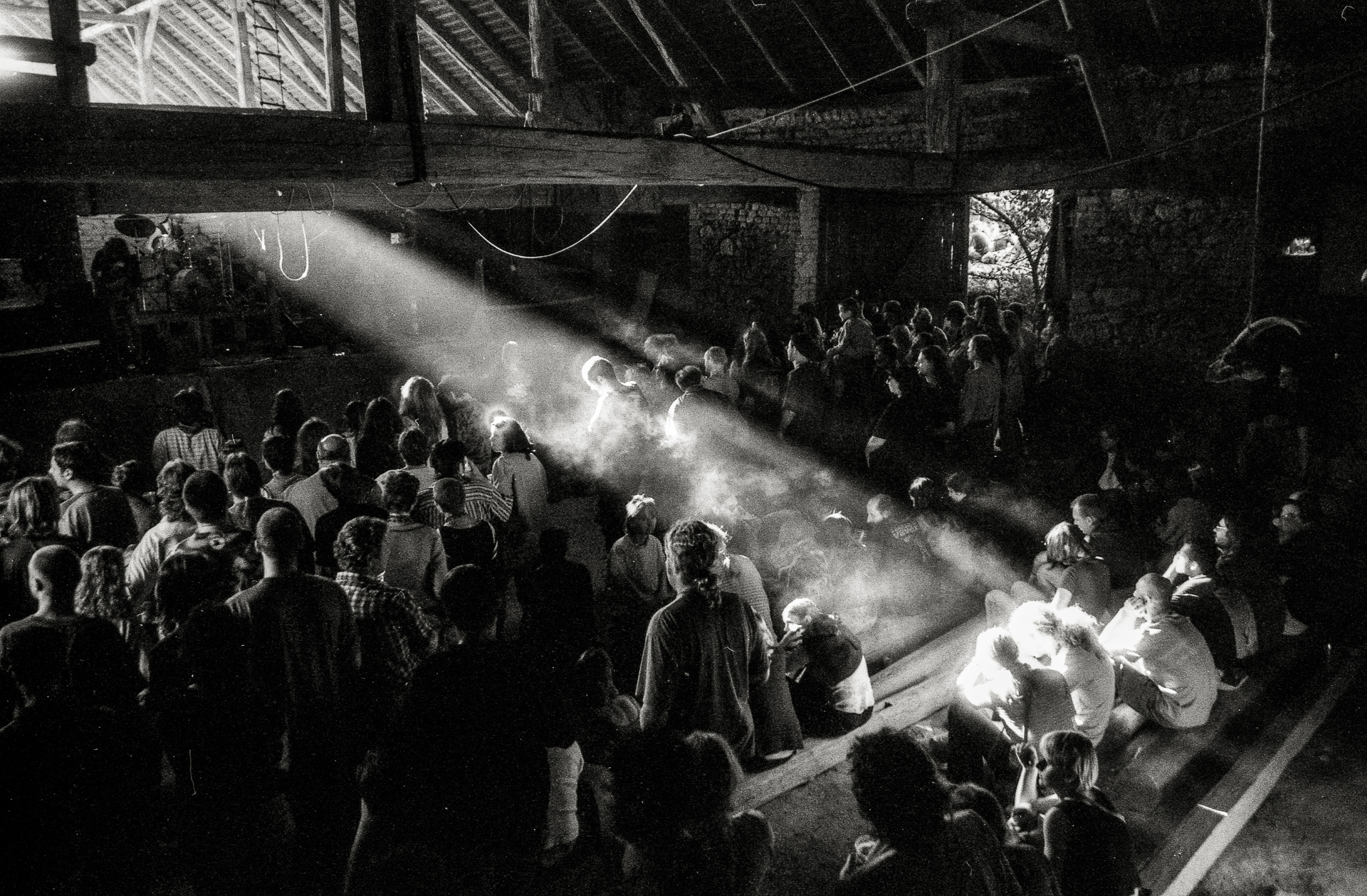
I developed the films, scanned about three photos, and forgot about them for many years. Later, I would occasionally recount how the parties at Magor's went, vividly describing how light would stream through the holes in the barn roof in the evening, creating streaks of light and dazzling the audience, and how the bands, with the light behind them, looked like angels descending from heaven, playing electric shawms. How frightened pigeons circled in the rafters of the barn and shit down on the underground. Years later, I began to doubt whether I had made it all up, times had changed and even to me the memories seemed a little unreal.
On the tenth anniversary of Magor's death, I started looking for the films, inspired by Abbé Libanský, who published a book on the anniversary. It took me four years, but I found one film. The photos are as crappy as I thought they would be, but at least now I know it really happened.
Ivan Martin Jirous (1944 – 2011) was a Czech poet and dissident, best known as the artistic director of the Czech psychedelic rock group The Plastic People of the Universe, and later one of the key figures of the Czech underground during the communist regime. He is more frequently known as Magor, which can be roughly translated as "shithead", "loony", or "fool" (though meant as a positive title).
Trained as an art historian but unable to work in this field in Czechoslovakia under the Communist regime, Jirous became a member of the dissident subculture, and during the period of normalisation, Jirous was imprisoned five times for his activities. His particular contribution to the dissident movement was the concept of "second culture", according to which simply expressing oneself through forbidden cultural and artistic activities would ultimately undermine the totalitarian system, a concept closely related to his friend Václav Havel's "living in truth", and Václav Benda's "parallel polis".